Everything I can do to help manage my gMG better is my priority.”
Person living with gMG
for 18 years
Everyone experiences the symptoms of gMG differently
While most people have fluctuating muscle weakness and fatigue, these symptoms vary from person to person and can range from mild to severe. gMG symptoms can make a variety of familiar activities like climbing stairs, chewing, brushing your teeth, or combing your hair very challenging.
DID YOU KNOW?
Around
50%
of people with gMG
still have moderate-to-severe symptoms that limit their activities of daily living despite treatment with conventional therapies.
Never settle for uncontrolled gMG. Find out if targeted
therapy is right for you.
People with gMG may be reluctant to report the true impact of their symptoms due to concerns about switching treatment
Coping strategies can mask the true impact that gMG has on people’s lives

Changing or reducing the amount or type of work

Proactively cancelling plans if necessary

Adapting in how to conduct activities of daily living, such as eating or personal hygiene
See how healthcare providers assess the many ways gMG can affect your activities of daily living.
Uncontrolled gMG may affect many aspects of life
In a survey of 28 individuals with gMG, participants reported that their symptoms had a significant impact on daily activities in both their personal and professional lives.
96%
experienced an impact on social life
People with gMG may struggle to meet up with family and friends.
46%
reported mental fatigue
Nearly half of people with gMG surveyed recalled a lack of motivation associated with physical fatigue.
100%
experienced impacts on work, career, and finances
People with gMG may miss out on work-related opportunities as a result of gMG symptoms and flare-ups.
Targeted treatments and the standard of care for people with gMG
The approach to gMG is evolving with the development of therapies that treat gMG differently. Targeted treatments may be an option for adults with gMG who are experiencing symptoms that are not well-controlled or are not satisfied with their current treatment plan.
If you are interested in targeted treatment, talk to your doctor about your options. Your doctor can help you understand the options based on your unique symptoms and health history.


UCB is proud to offer two treatments that target key causes of gMG symptoms
The neuromuscular junction, or NMJ, is the place where nerves meet the muscles they control.
gMG is caused by harmful antibodies produced by your immune system that get in the way of signaling in the NMJ.
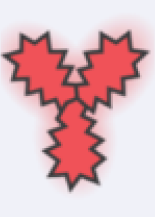
Many people with gMG have anti-acetylcholine receptor (AChR) antibodies. A small number have anti–muscle-specific tyrosine kinase (MuSK) antibodies.
Healthy NMJ
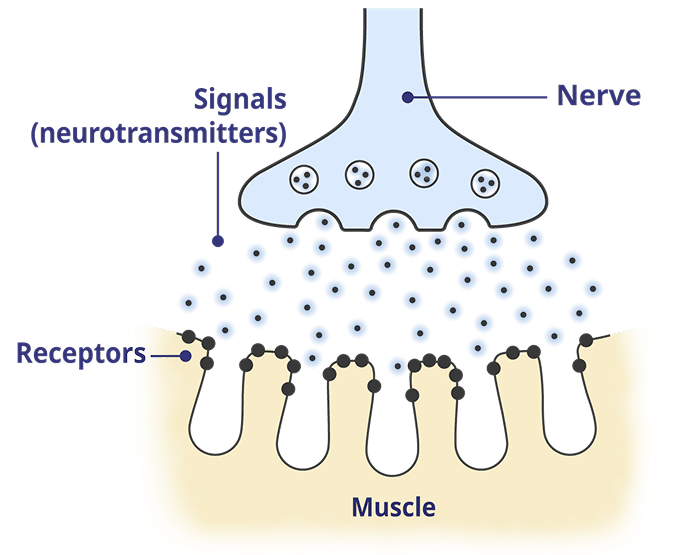
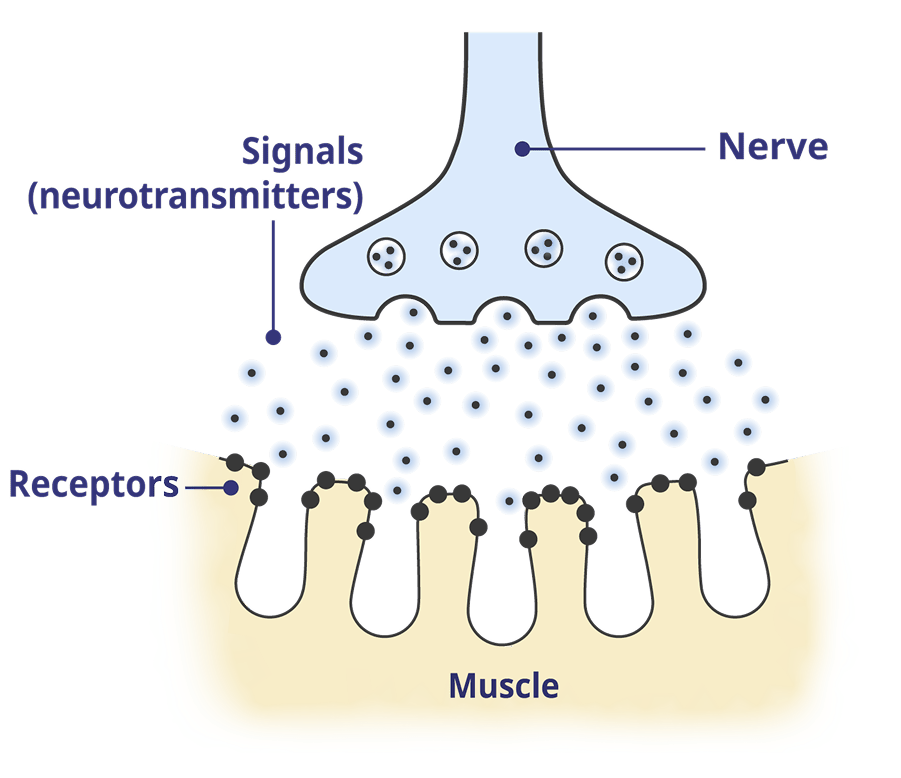
Signals are sent from nerves and received by muscles as part of normal muscle function and movement
Both anti-AChR and anti-MuSK antibodies may stay in your body longer than normal because of the protein FcRn, or neonatal Fc receptor.
Inside cells
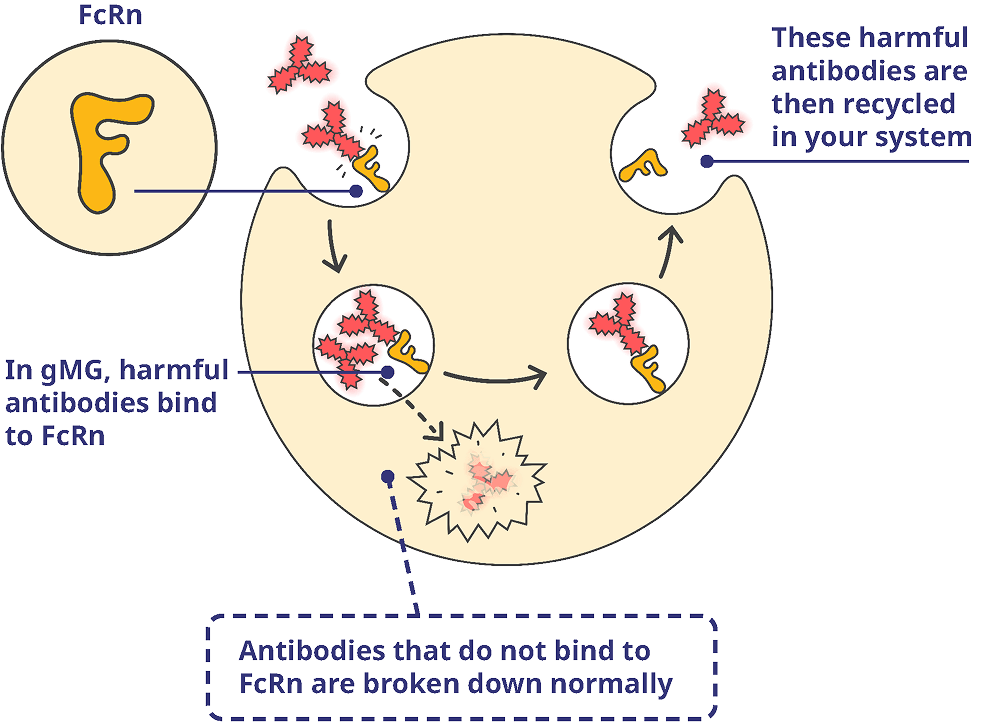
FcRn can stop harmful antibodies from being broken down by your cells’ natural waste clearance system
NMJ impacted by gMG
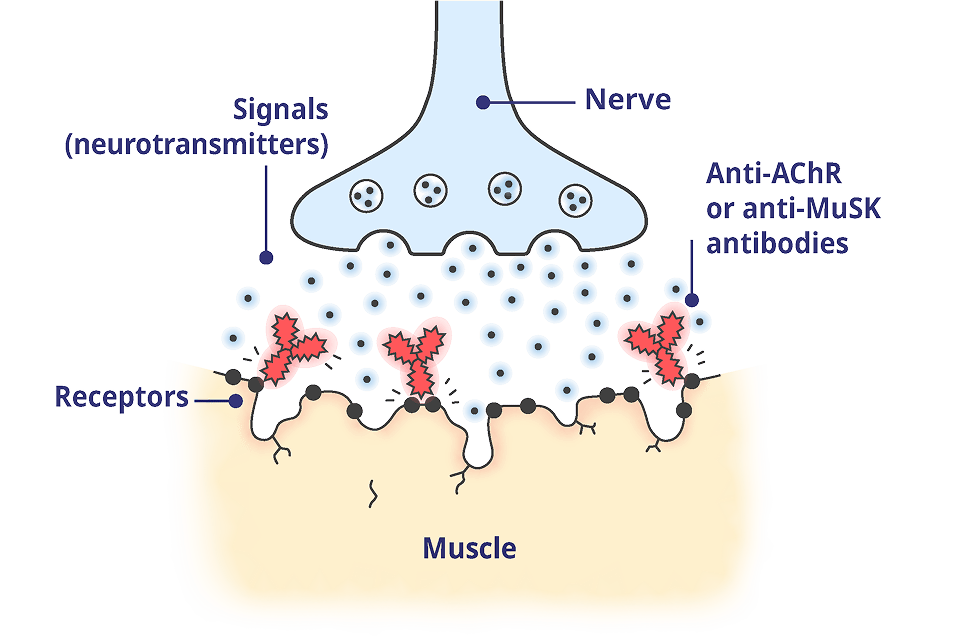
These antibodies block signals in the NMJ, resulting in damage to muscle cells and the symptoms of gMG
Anti-AChR antibodies also activate a part of your immune system called "complement," including protein C5.
NMJ impacted by gMG
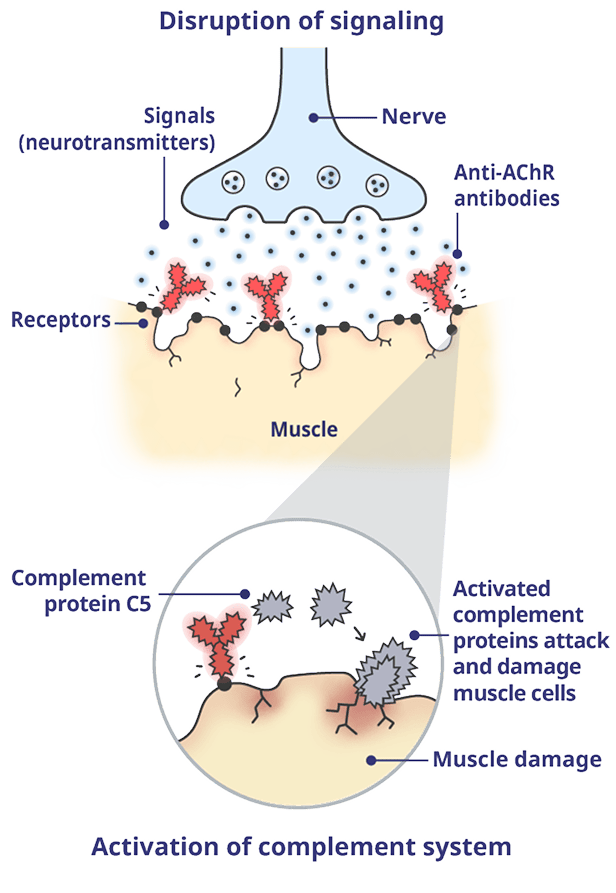
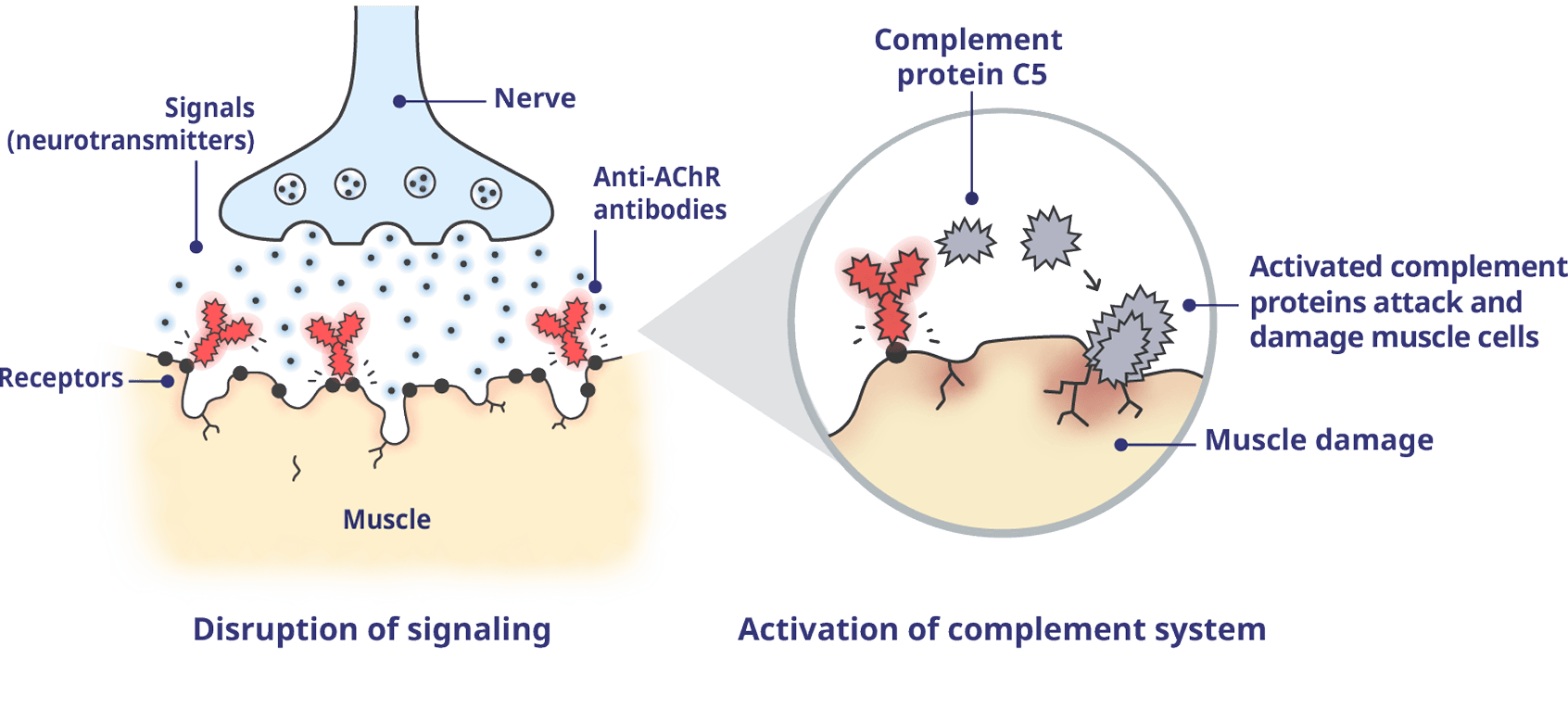
Harmful antibodies disrupt signals and activate the complement system, resulting in damage to muscle cells and the symptoms of gMG
Discover an FcRn blocker
Harmful antibodies that cause gMG may stay in your body longer because of FcRn (neonatal Fc receptor) proteins.
Explore a C5 inhibitor
Harmful anti-acetylcholine receptor (AChR) antibodies activate part of your immune system called "complement", which works to attack your muscle cells.
